How to Start Forex Trading as a Beginner in 2026 Without Blowing Your First Account
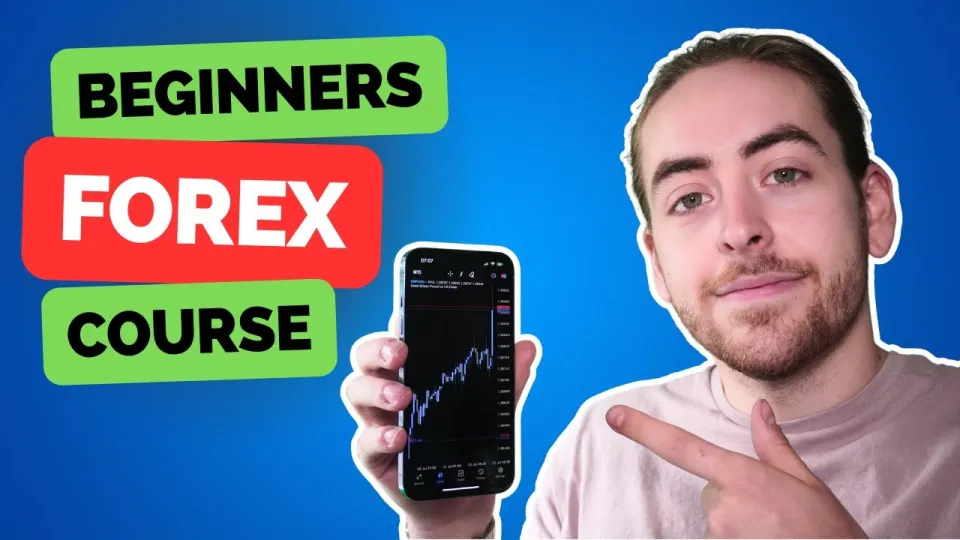
Video: Forex Trading For Beginners (FULL COURSE)
You can order the same kind of articles for your own video to boost it on YouTube and Google. Just message the Telegram bot @sat_sit_bot. It writes articles around your video, embeds the video and publishes them on popular niche websites (no ads). Free trial — 50 articles.
· based on the channel JeaFx
Forex trading for beginners means learning four things in order: what currency pairs actually are, how a broker and a trading account work, how money is made from exchange-rate movement, and how to protect capital while you build an edge. Retail traders do not buy a currency to hold it like a stock; they speculate on the relative price of one currency against another through a broker. A structured starting point is available in JeaFx's beginner trading class, which pairs the core concepts with a step-by-step path into the market.
What forex is and what is actually traded
Forex is the market where national currencies are exchanged, and everything a beginner trades is a currency pair quoted as base and quote currency. The price of EUR/USD at 1.0850 means one euro buys 1.0850 US dollars; if the rate rises, the euro strengthened against the dollar and a long position profits. The most liquid pairs — EUR/USD, USD/JPY, GBP/USD, USD/CHF — sit in the "majors" group because they carry the tightest spreads, while exotic pairs like USD/TRY or USD/ZAR offer bigger moves at a much higher cost and risk.
Three structural facts shape every beginner's experience:
- It is an over-the-counter market. There is no single exchange; trades are routed through a network of banks, brokers and liquidity providers, so your broker's pricing and execution are part of your result.
- It runs nearly 24 hours a day, five days a week. Sessions roll from Sydney to Tokyo to London to New York, and volatility concentrates when London and New York overlap.
- Most volume is speculative. Currencies move on interest-rate expectations, inflation data, central-bank decisions and risk sentiment, not on a company's earnings.
How money is made in currency trading
Profit in forex comes from the difference between your entry and exit price on a position, multiplied by your position size and adjusted for the pip value of the pair. If you buy EUR/USD at 1.0850 and close at 1.0900, you captured 50 pips; the dollar amount depends on lot size, where one standard lot equals 100,000 units of the base currency. A mini lot is 10,000 units and a micro lot is 1,000, which is why micro lots are the sensible default while learning.
Leverage is the mechanism that makes small accounts feel large. At 1:100 leverage, a $1,000 account can control $100,000 of currency, so a 1% move against you wipes out the entire balance. That arithmetic explains why experienced traders talk about risk per trade rather than potential profit: with 1% risk, ten consecutive losses cost roughly 10% of equity, while with 10% risk the same streak is close to ruin. Spreads and commissions are the other side of the equation — a 1.5-pip spread on a 20-pip target removes a meaningful share of the edge before the trade even resolves.
Broker and trading account setup
A broker is the intermediary that gives you access to the interbank market, and choosing one is a risk decision rather than a shopping decision. Check regulation first — a licence from a tier-one authority such as the FCA, ASIC or CySEC means client funds are segregated and there is a complaints process — then compare spreads on the pairs you intend to trade, execution quality, minimum deposit and platform choice. MetaTrader 4 and MetaTrader 5 remain the standard, with cTrader and TradingView widely used for charting.
A practical setup sequence for a new account:
- Open a demo account with the same broker and platform you plan to use live, so your testing reflects real spreads.
- Fund it with the same amount you intend to deposit later — a $500 demo behaves differently from a $50,000 one.
- Configure the platform before the first trade: lot size, stop-loss and take-profit defaults, and a chart layout you will read every day.
- Trade the demo for a defined period, typically two to three months, and log every trade.
- Only move to live capital once the journal shows a repeatable process, and start with the smallest size the broker allows.
Building a market edge before risking real money
An edge is a repeatable reason why your winners outweigh your losers after costs, and beginners usually find it in price action rather than in indicators. Support and resistance, trend structure, session highs and lows, and candlestick patterns around key levels are the raw material; the edge comes from testing one idea hundreds of times and measuring whether it survives spread and slippage. Backtesting on historical charts — bar by bar, without hindsight — is the cheapest way to find out that a strategy does not work.
A workable beginner framework looks like this:
- One pair, one session, one setup. EUR/USD during the London session, for example, rather than five pairs at all hours.
- A written rule set. Entry trigger, invalidation level, target and the conditions under which you do not trade.
- A journal with numbers. Date, session, setup name, risk in percent, result in R (risk multiples), and a one-line note on execution quality.
- A weekly review. Twenty to thirty trades is the minimum sample before judging whether a strategy has any promise.
Mindset, expectations and the $500 account problem
The most common beginner failure is not a bad strategy but a mismatch between account size, risk and expectations. A $500 account risking 1% per trade makes $5 per trade at a 1:2 reward-to-risk ratio; that is the honest math, and it is why so many new traders increase leverage instead of building a track record. Treating a small live account like a casino — oversized positions, revenge trades after a loss, no daily loss limit — converts tuition into donations to better-capitalised participants.
Expectations worth setting before the first live trade:
- A first year is for survival, not income. The goal is a positive expectancy over a few hundred trades, not a monthly salary.
- Drawdown is normal. Even a good strategy with a 50% win rate and 1:2 payoff will produce losing streaks of five or more trades.
- Process beats prediction. A trader who follows rules and loses is closer to success than one who breaks rules and wins.
- Screen time is the real investment. Chart reading improves through repetition, not through buying another course.
Common beginner questions and misconceptions
Beginners repeatedly ask the same things, and the answers are less exciting than the marketing suggests. "How much do I need to start?" — any amount the broker allows, but the meaningful threshold is enough capital that 1% risk is not psychologically trivial. "Can I trade forex as a side income?" — yes, eventually, but only after a documented sample of profitable trades, which usually takes far longer than a few weeks. "Do I need a course?" — not strictly, but structure shortens the trial-and-error phase, which is why guided programmes such as the one at jeafx.com/go exist. "Why did my demo results not transfer to live?" — because real money changes execution: wider spreads at news, slippage on stops, and the emotional cost of an actual loss.
Useful links
- JeaFx beginner trading class — the core course material for new traders
- Mentorship and guided trading
- JeaFx on Instagram
- JeaFx free Telegram community
Final thoughts on starting forex the right way
Forex rewards preparation and punishes improvisation, so the sequence matters more than the speed: understand the pairs, pick a regulated broker, test a single setup on demo, journal it, and only then risk money you can afford to lose. The traders who last are the ones who treat a small account as a laboratory rather than a lottery ticket, capping risk per trade and reviewing results weekly. This breakdown draws on the full beginner course published by the JeaFx channel, which is worth watching end to end rather than skipping to the strategy section. If you want the structured version with guidance, start with the JeaFx beginner class and work through it before your first live trade.
Key takeaways
- Forex is an over-the-counter market where currencies are traded in pairs, and retail traders usually access it through a broker's platform rather than a central exchange.
- Profit comes from the change in the exchange rate between two currencies, amplified by leverage, which is why position sizing matters more than the entry signal.
- A common beginner risk framework caps risk at 1% of account equity per trade and sets a daily drawdown limit before the session starts.
- Demo trading and backtesting should come before any live capital; a $500 live account treated as a casino is the fastest route to a blown balance.
- A trading journal that records setup, session, risk and outcome turns random results into data you can actually improve on.
Questions & answers
How much money do I need to start forex trading?
Technically a broker will let you open an account with a few hundred dollars, but the practical threshold is an amount where risking 1% per trade still feels meaningful rather than trivial. Many beginners start with a micro-lot demo account first and only deposit live capital once their journal shows a repeatable process.
Is forex trading gambling if I use a small account?
It becomes gambling when position size is chosen for excitement rather than by a risk rule. A $500 account risking 1% per trade with a defined daily loss limit is a small business; the same account risking 20% per trade with no stop-loss is a casino bet.
How long does it take to become consistently profitable?
There is no fixed timeline, but judging a strategy requires a sample of at least twenty to thirty trades, and building that sample takes months at a disciplined pace. Most traders who last treat the first year as a period for survival and data collection rather than income.
Do I need a course or can I learn forex for free?
Free material covers the basics, but structure shortens the trial-and-error phase because it forces a sequence: market basics, account setup, backtesting, risk rules, then live trading. A guided programme helps mainly by removing the temptation to skip the boring parts.
Source: Forex Trading For Beginners (FULL COURSE) · Markdown version